If you have learned how to use Claude but still have not made a dollar from it, you are not alone. A lot of people spend weeks watching AI tutorials, collecting prompts, and building elaborate “AI systems” without ever selling anything to a real business.
The video’s argument is refreshingly simple: you do not need to become an AI expert, build a team of agents, or create a complicated automation empire before earning income. You need one useful service, one type of client, and a way to make saying yes easy.
The creator’s recommended starting point is building simple websites for local businesses using Claude. Then, once you have earned a little trust, you can offer a small AI automation that solves a real problem for that same business. This is not a get-rich-quick pitch; it is a practical service-business approach that uses AI to reduce the time and skill barrier.
In this article, we will break down the four-step roadmap from the video: choose a niche, build a demo before pitching, make the offer easy to accept, and turn one project into recurring work. We will also look at who this approach suits, its limitations, and how to use it responsibly.
What Is the Claude AI Service Model?
The core idea is to use Claude as a production tool for a service businesses already understand: website design and improvement.
Businesses have paid for websites long before AI existed. A website helps a local business look credible, explain its services, collect inquiries, and make it easier for potential customers to take action. The video’s creator argues that many small businesses either do not have a website or have one that looks outdated.
Want the exact Claude prompt and outreach message?
Comment “WEBSITE” and I’ll send it to you.
Instead of learning traditional web development for months, the method uses Claude to research a business, understand its branding and services, and generate a modern-looking demo website. The creator specifically mentions using a website-design skill called ScrollCraft to improve design quality through elements such as scroll animations, layering, depth, typography, and spacing.
The business model is not really “make money with Claude.” It is “sell a useful business outcome, then use Claude to deliver it faster.” That distinction matters. A client is not paying for a chatbot conversation; they are paying for a better website, more bookings, faster follow-up, or a professional online presence.
The broader opportunity comes after the first sale. Once a business trusts you with its website, you can identify a follow-up problem—such as slow responses to form submissions—and offer a simple automation or AI workflow to address it.
Why Trust This Review?
This review is based on the video title, its full transcript, and the claims made by the creator. It is an independent breakdown, not a guarantee that you will earn money or land clients by following the method.
The video includes a personal story from the creator: they say their first AI-related sale was a LinkedIn content system for $1,200, which they claim took about two hours to build. They also describe how consulting calls helped them become the “AI person” for clients who did not want to learn every tool themselves.
Those stories can be useful illustrations, but they should not be treated as typical results. Client acquisition, pricing, delivery quality, and repeat business vary enormously by market, skill, communication, and effort.
The strongest part of the video is that it does not recommend starting with a huge, expensive AI system. It recommends a small, visible deliverable: a redesigned website demo. That makes the idea easier to evaluate and less intimidating for a beginner.
The main limitation is that the video is promotional in places. It mentions a free community, courses, challenges, and the ScrollCraft skill. That does not automatically make the advice wrong, but readers should treat product recommendations as opinions and verify anything before relying on it.
How It Works
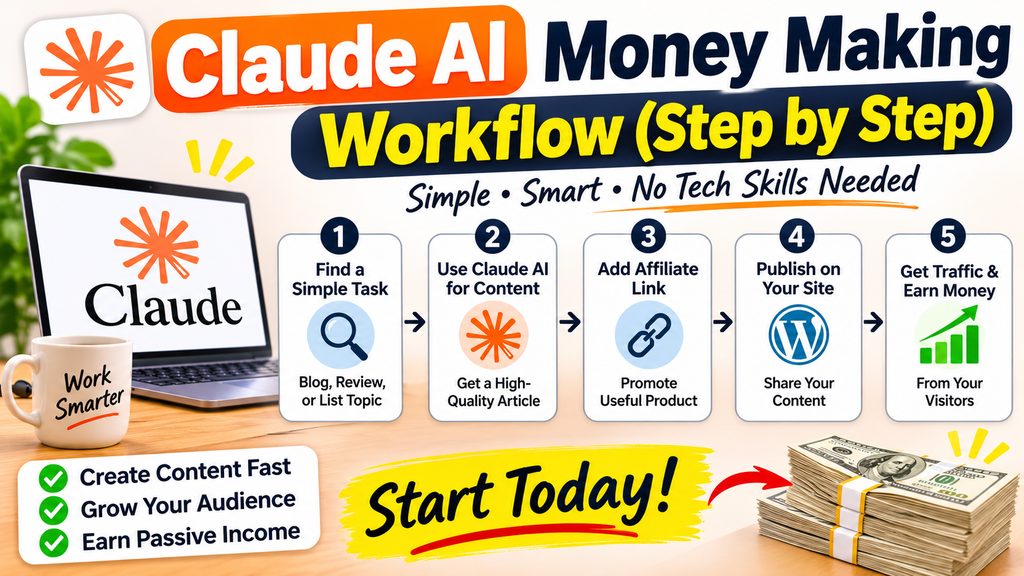
The method follows a four-step roadmap.
1. Pick one client type
Choose a single industry rather than trying to serve everyone. The video uses dentists as an example because dental practices often need similar website elements: appointment booking, insurance information, reviews, service pages, and clear calls to action.
The creator’s three filters are:
- Choose businesses that already have a budget for marketing or websites.
- Choose businesses where one new customer is valuable enough to justify an investment.
- Choose an industry with an existing list of prospects, such as a professional directory or Google Maps results.
For example, a local med spa, roofing company, dental clinic, law firm, or home-service business may fit better than trying to build websites for every type of company.
2. Build before asking
Rather than spending weeks making practice portfolio sites, select one real business and create a demo redesign. The video suggests using Claude to inspect the company’s existing website, identify its branding, services, target audience, and messaging, then create a stronger version.
The creator says a recent AI-built site took roughly 15 minutes, plus another 10 minutes for feedback and revisions. That speed is the key advantage: you can create a relevant demo without committing weeks to a prospect who may never reply.
3. Make yes easy
Send the demo to the owner or decision-maker with a simple offer. The video’s example message says, in effect: “I rebuilt your homepage. Here is the link. If you like it, I can put it live this week. If not, you do not owe me anything.”
That removes much of the risk from the prospect’s side. They can see the work before deciding whether to hire you.
4. Sell the next useful solution
After delivering the website, listen for another problem. If the site generates booking requests but the business responds slowly, offer a lead follow-up system. If appointment no-shows are the issue, offer reminders or reactivation workflows.
The creator calls this the “spot, build, prove” framework:
- Spot a real operational pain point.
- Build a focused automation or AI workflow.
- Prove its value by tracking one meaningful metric over 30 days.
Key Takeaways
- Start with a small, understandable service. A website is easier for a business owner to evaluate than a vague “AI transformation” offer.
- Specialize in one industry. Repeating similar work lets you build templates, understand common needs, and create a relevant portfolio faster.
- Use Claude as a delivery accelerator. The method uses Claude to research a business and create a website demo, rather than positioning AI as the product itself.
- Lead with proof, not promises. A live demo link lets the prospect judge the work directly.
- Make the first offer low-risk. The creator’s approach is to build first, then offer implementation with little or no upfront commitment.
- Follow up consistently. The video claims that 42% of replies come through follow-ups, so a single cold message is unlikely to be enough.
- Turn one project into recurring revenue. After the website, look for a narrow automation opportunity such as lead follow-up, appointment reminders, or form-response workflows.
- Avoid scope creep. Keep a list of additional requests and turn them into future paid projects rather than adding them all to the first job.
Who Is It For?
This approach is best suited to beginners who want a concrete first service rather than an abstract AI business idea. It may fit freelancers, students, side hustlers, marketers, virtual assistants, and employees who want to become more valuable inside their current company.
It is especially relevant for people who already understand basic business communication. You do not need to be a programmer, but you do need to be able to identify a business’s services, understand its customers, write a clear outreach message, and follow up professionally.
The method may also work for someone already employed at a small business. Instead of cold outreach, you can rebuild a page that customers struggle with, show your manager the before-and-after version, and offer to replace it. The video frames this as a way to become the company’s internal “AI person.”
It is probably not ideal for someone who expects passive income with no client communication. You will still need to research businesses, build demos, send messages, handle feedback, deploy websites, and manage expectations.
It is also not the best fit for someone unwilling to learn basic web deployment, design principles, or client service. Claude can accelerate the work, but it does not remove the need for judgment.
Pros and Cons
Pros
- Low starting complexity: The video emphasizes a simple four-step process rather than complex multi-agent systems.
- Clear deliverable: A website redesign is easy for a prospect to understand and evaluate.
- Fast demo creation: Claude can reduce the time required to produce a first version, according to the creator’s experience.
- Built-in proof: Showing a redesigned site is stronger than merely describing what you could do.
- Natural upsell path: A website can reveal follow-up needs such as booking, follow-up, reminders, or lead management.
- Repeatable workflow: Working within one industry makes it easier to reuse structure, copy, and design patterns.
- Useful for employees too: The same approach can help you demonstrate initiative inside a company.
Cons
- Client acquisition still takes effort: Building the site is only part of the work; outreach, follow-up, and rejection are unavoidable.
- AI output needs review: A generated website may contain inaccurate business details, weak copy, poor accessibility, or broken functionality.
- Using a business’s branding carries risk: The video itself notes that a demo using a real company’s name and logo could not be turned into a public artifact, highlighting a practical limitation.
- Free work can attract the wrong clients: Offering a free build may lead to unrealistic expectations if boundaries are not clear.
- Results are not guaranteed: A better-looking website does not automatically produce more leads or bookings.
- The video promotes its own resources: The free community, courses, and ScrollCraft skill may be useful, but they are also part of the creator’s funnel.
Pricing and Guarantee
Pricing and guarantee details were not clearly provided in the available video information, so readers should verify them directly from the official source before making a decision.
The video does mention that the creator’s first workflow sold for $1,200, but it does not provide a standard pricing structure for website builds, automations, consulting, or ongoing retainers. It also does not specify refund terms, contractual terms, or a money-back guarantee.
If you use this method, decide your own boundaries before outreach. For example, you might offer one free homepage concept, clearly state that it is a demo, limit revisions, and require approval before deploying anything to a client’s live domain.
Is Claude AI Website Building Worth It?
For someone who wants a practical entry point into AI-powered freelancing, this approach has merit. It avoids the common mistake of trying to sell an abstract AI concept before demonstrating value. A business owner can look at a redesigned homepage and immediately understand what they would be buying.
The biggest strength is speed. If Claude can help you produce a credible first draft in minutes, you can test more prospects without spending weeks building speculative portfolios. That does not mean every demo will be good enough to send. It means you can iterate faster, learn from feedback, and improve your process.
The biggest caution is that AI-generated work still needs human quality control. You should verify contact details, service descriptions, images, claims, legal language, mobile responsiveness, forms, and accessibility. Sending a polished but inaccurate website demo can damage trust quickly.
This is worth considering if you are willing to treat it as a service business: choose a niche, build useful demos, communicate clearly, follow up, and solve one problem at a time. It is less suitable if you want guaranteed income or expect AI to replace the need for sales and client management.
Final Verdict
The video’s central message is sensible: do not begin with a complicated AI system. Begin with a service businesses already value, use Claude to deliver it more efficiently, and expand only after you have earned trust.
The proposed path—choose one client type, build a demo, make acceptance easy, then offer a focused automation—is practical and beginner-friendly. It turns Claude from a novelty tool into part of a real workflow.
However, the method is not effortless. You will face ignored messages, revisions, technical issues, and prospects who say no. The creator’s advice to aim for your first ten “no” responses rather than obsessing over the first yes is a useful mindset.
If you are willing to learn, communicate professionally, and deliver genuinely useful work, this could be a reasonable way to start earning with Claude in 2026. If you are looking for a hands-off income stream, this is not that.
This article is for educational purposes only and is not financial, investment, legal, or tax advice.
FAQ
Do I need to be an AI expert to start?
No. The video’s position is that you only need to know a little more than the person hiring you. However, you should still understand the service you are selling well enough to deliver it responsibly.
What service does the video recommend first?
The video recommends building or improving websites for local businesses using Claude. The creator presents this as an accessible first offer because businesses already understand the value of a website.
Do I have to build websites for free?
Not necessarily. The video describes one example where a person did initial work for free in exchange for permission to use the result as a case study, testimonial, or referral. That is a strategy, not a requirement. Set clear boundaries before offering free work.
How do I find potential clients?
The video suggests using Google Maps to find local businesses, especially those with weak or missing websites. It also recommends industry directories, such as professional member lists, because they can help you identify relevant prospects.
What happens after I build the first website?
The video recommends identifying another problem the client has, such as slow follow-up on leads or appointment no-shows. Then build a focused automation, demonstrate it, and track one metric for 30 days to show whether it helped.
Is this guaranteed to make money?
No. The video does not promise guaranteed income. Success depends on your niche, outreach, quality of work, pricing, follow-up, and ability to solve real client problems.
